Bruichladdich – Behind the Label
The story of Bruichladdich's resurrection and survival against the odds, is a big part of what made it famous. Now part of the French group Rémy Cointreau, it is still run from Islay and remains as rooted to its island home as ever discovers Tom Bruce-Gardyne …
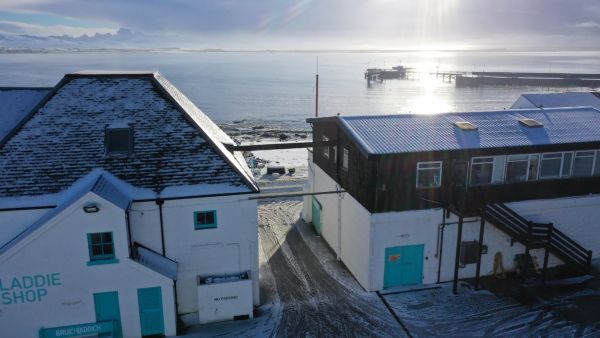
Growing up near Bruichladdich on the west of Islay by Loch Indaal, Adam Hannett used to pass the distillery every day on the way to school. The place was shuttered behind locked gates, and the jobs it once supported were gone. It closed in 1994 - another casualty of the whisky loch.
Two warehousemen were retained to look after the stock that included casks from its sister distillery of Jura. For its owners, Whyte & Mackay, it had been a dilemma which one to save. Had the Jura distillery closed it would almost certainly have gone for good.
Bruichladdich was likely heading the same way until the London wine merchant and independent whisky bottler, Mark Reynier put together a consortium to buy it for £6m in December 2000. It was pretty derelict, and according to Adam: "It's probably fair to say it was £6m for the stock, and the distillery came free."
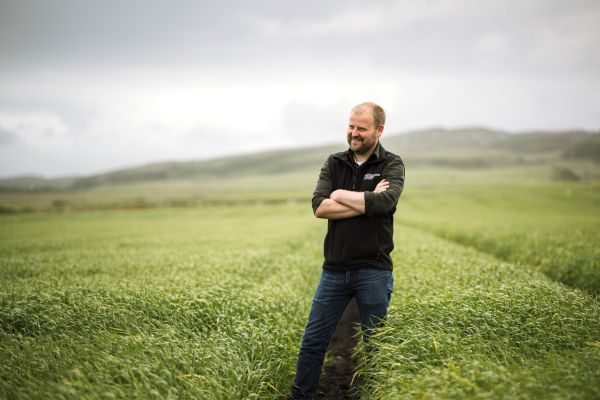
Adam spent a year as a tour guide in 2004 and then returned in 2006 for two weeks, and never left. He took over as whisky maker from the legendary Jim McEwan in 2015, and is now Bruichladdich's master distiller.
Having been an unpeated malt for blending, apart from what was drunk by the locals, Bruichladdich was transformed into a single malt brand with a bright new aquamarine label. But while the whisky remained unpeated, the distillery's four stills also produce Port Charlotte, a typically smoky Islay malt, and Octomore, a peat bomb to rival Ardbeg.
Bruichladdich was state-of-the-art when it was built in 1881 by the Harvey brothers in Glasgow where they owned a pair of grain distilleries. Over time it became something of a museum distillery with its antiquated kit and lack of computers, but it was well-conceived with a gravity-fed design.
"The tall stills are really important for the character of the spirit which is quite light and quite elegant," says Adam. The mashtun is still the original as is the base of one of the wash stills despite years of being direct-fired, thanks to the incredible thickness of the copper.
"Because the stocks were so patchy, Jim was almost creating whiskies out of thin air," he says of those early years. "A lot of distributors hated Bruichladdich because there was no consistency to it." And yet its endless stream of new releases created excitement among consumers and the beginnings of a cult following.
With everything aged and bottled on the island since 2004, the story was all about provenance. "But when we started talking about terroir, we were laughed out of the room," he says. There was a famous debate on the subject between Jim McEwan and Diageo's Nick Morgan. Most of the big distillers tanker their spirit off the island, claiming it makes no difference to the whisky.
Those at Bruichladdich vehemently disagree. "The casks are breathing in Islay air as they mature," says Adam, who adds: "Half the barley we're using comes from the island, so that could be £1 million-plus going back into the farming community." With a workforce of eighty, the distillery is easily Islay's biggest private employer.
From the start, Mark Reynier and Simon Coughlin, who later became MD, moved to Islay to oversee things. "And we still run the business from here, which is really good. It means different opportunities and professions. It's not just about being a tour guide, or a stillman or a mashman," he says.
There was certainly a whiff of Brewdog, the self-styled bad boy of British brewing, in the way Bruichladdich promoted itself as an outsider kicking against the establishment. That was partly down to Reynier's character, but it was mostly out of necessity. "We were doing things to grab attention because the marketing budget was zero," says Adam. "We had to make a noise."
Behind the scenes it was a story of survival. "At the end of the year we would gather for a dram, and you didn't know if you'd have a job in January," he recalls. Eventually, Bruichladdich broke even – a milestone celebrated with a release called Red to Black, and in 2011, it was able to unveil its first 10 year-old distilled by the new regime.
A year later they sold Bruichladdich to the Cognac house Rémy Cointreau for £58m. "I think they knew they could only take it so far," says Adam. Apparently, when Simon Coughlin made his first presentation to the Rémy board, he taped over the words 'Fiercely independent', only to discover that was part of the appeal for its new owners.
It seems the French understood the essence of Bruichladdich from the start. They have given it security and a wider access to the market, and allowed it to continue on its path as the most terroir-driven whisky. This ranges from distilling ancient grains like bere barley to exploring the impact of different soils. "What the yeast is metabolising are the nutrients from that particular soil, so the flavours released are unique to that place," Adam explains.
All this is eagerly devoured by Bruichladdich's loyal fans, but the challenge is how to engage others. "The whisky landscape is tough at the moment," he says. "As we grow, we need to be really cognisant of the message we're telling because the world is awash with information."
As other whiskies with cult followings like Ardbeg are aware – the language really matters when it comes to broadening your appeal. Too much detail and people will drift off. As Adam says: "Some folk just want a dram."
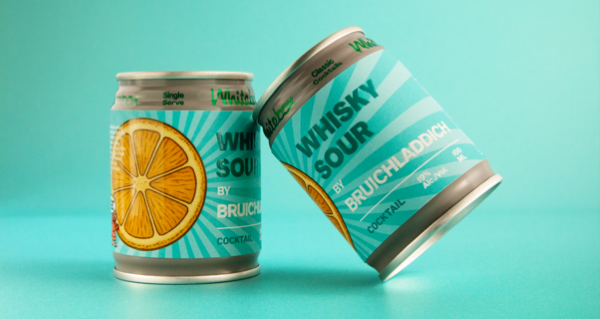
Or indeed, a cocktail – like the brand new Bruichladdich Whisky Sour in a can. Surfing the wave of upmarket RTDs and recruiting a few drinkers in the process is clearly a smart move.